
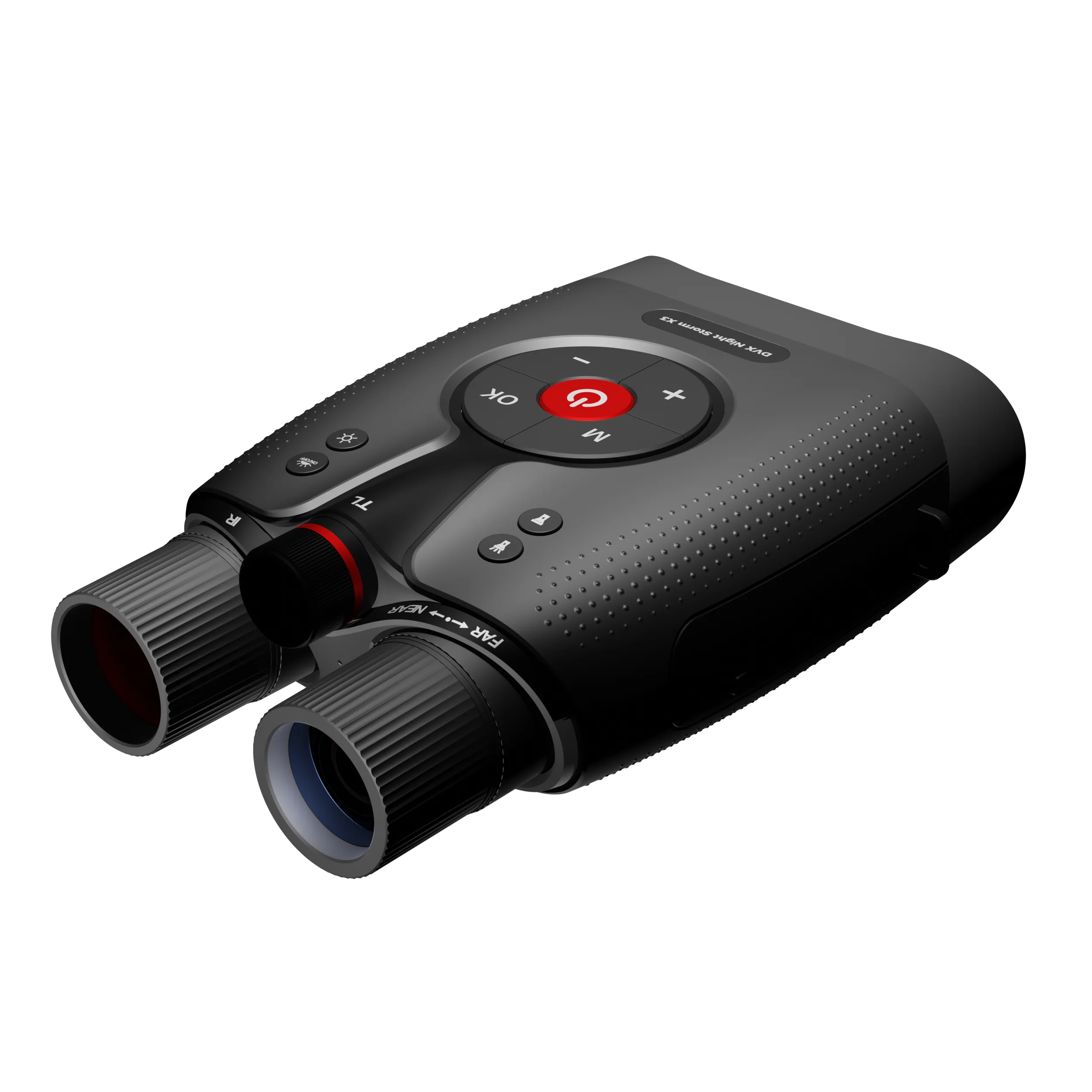
Built from first principles.
No intensifier tubes. No green phosphor. No borrowed parts. DVX rebuilt night vision around two sensors, one neural engine, and the physics of low light.
Two sensors.
One image.
Two sensors see the same night.
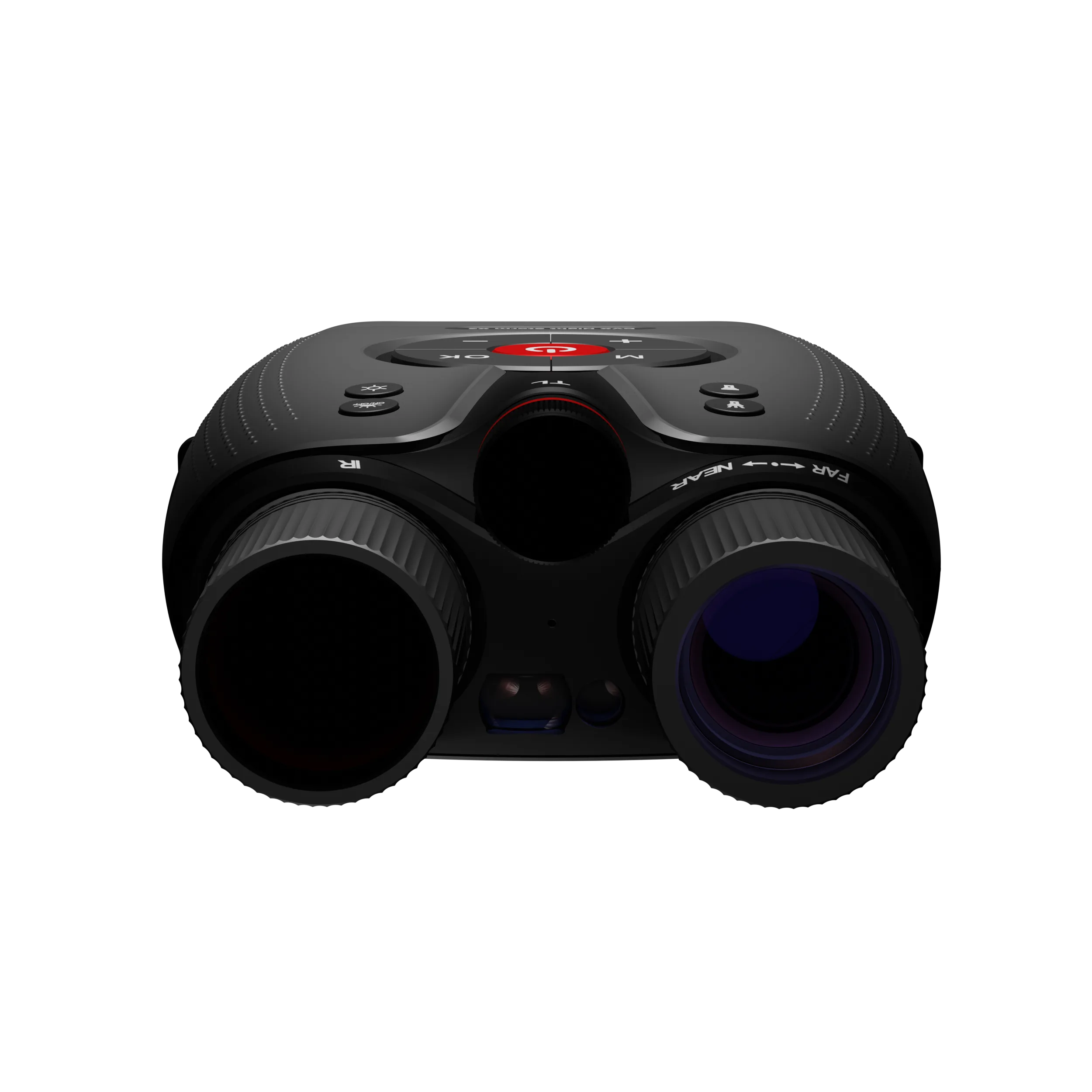
An IR low-light sensor drinks the 950nm band our invisible illuminator paints across the dark. Beside it, a 4K color sensor gathers the last visible photons — levels your eye registers as nothing. Each sees a night the other can't.
A neural engine merges them.
The 20 TOPS processor aligns both feeds pixel by pixel and fuses them 60 times per second. The IR feed contributes structure — what's there. Color contributes identity — what it is.
Native 4K color. In the dark.
The output is native 4K full color at 0.0001 lux. Not upscaled. Not interpolated. Every frame rendered from real signal — the scene as it is, not a guess at it.
The invisible
advantage.
Most digital night vision illuminates the dark with 850nm infrared. It works — and it glows. A faint red point, visible to wildlife and to people, marking your position to everything you came to watch.
Every DVX emitter operates at 950nm — past the edge of the visible spectrum. The deer doesn't lift its head. The owl doesn't leave the branch. The emitter is fully dark to the naked eye, at any distance, from any angle.
You see. You're not seen.
Everything else
is green fog.
Fifty years of night vision, compared honestly. Same night, same distance — three ways to see it.
| Spec | Analog Gen-2/3 tubes | Budget digital NV | DVX Night Storm X3 |
|---|---|---|---|
| Image | Green monochrome phosphor | Grainy 720p–1080p, washed gray | Native 4K, full color |
| Light floor | Needs ambient starlight; blooms near any light source | Needs IR floodlight to function | 0.0001 lux — moonless, overcast, pitch black |
| IR signature | Passive — but blind without ambient light | Visible 850nm red glow | 950nm — invisible to wildlife and people |
| Detection | Varies — degrades as light fades | 200–400m | 1500m + laser rangefinder, ±0.5m |
| Recording | None — optical only | Basic 1080p clips | Onboard 4K photo + video |
| Durability | Fragile intensifier tube; daylight can destroy it | Consumer plastics | IP67 — dustproof, submersible, daylight-safe |
| Price | $3,000–$40,000 | $150–$600 | From $429 |
Measured,
not marketed.
04 The numbers
Your eyes.
Then ours.
// Drag the line
No tricks.
No daylight.
05 Straight off the sensor
 FRM 2694
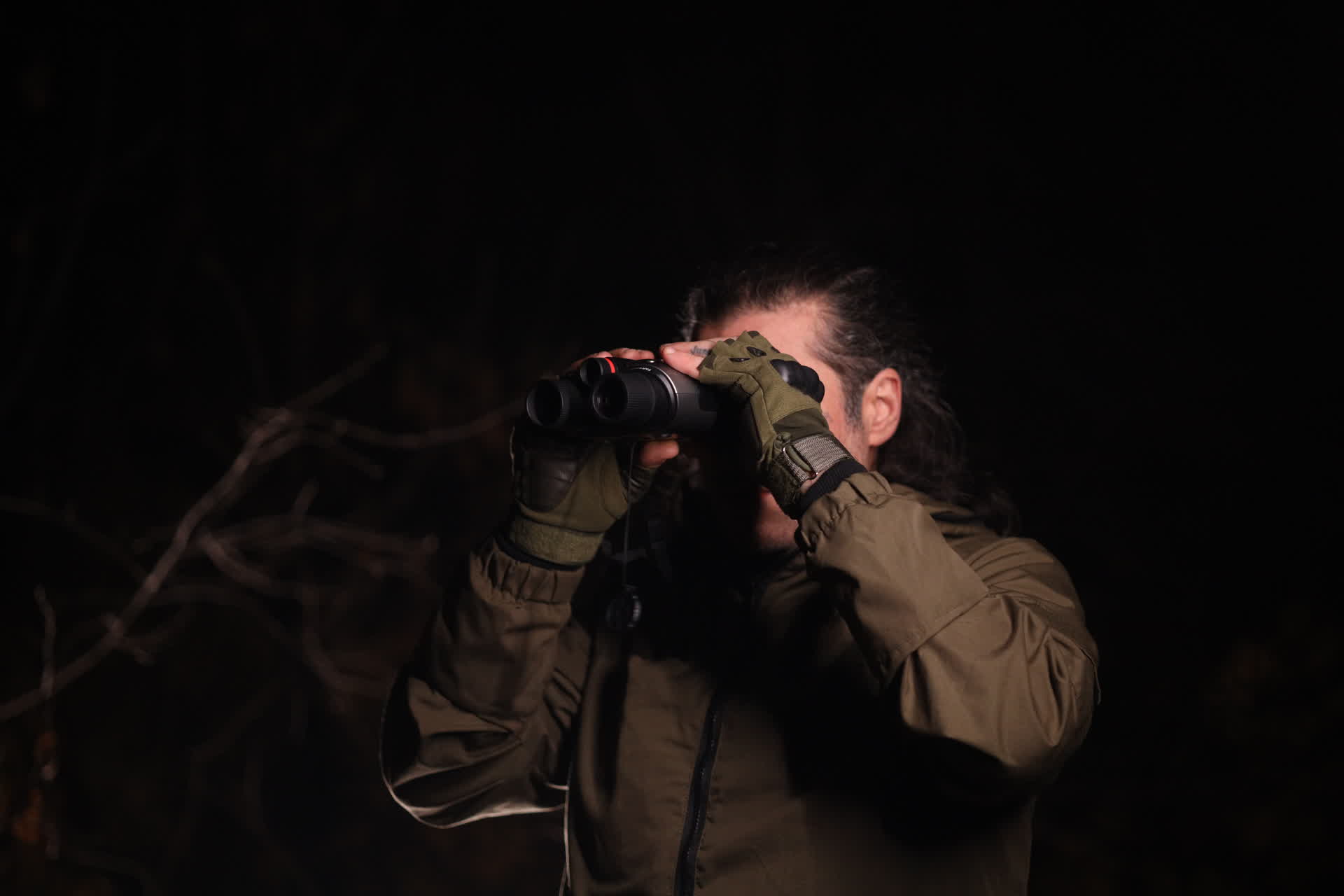 FRM 2760
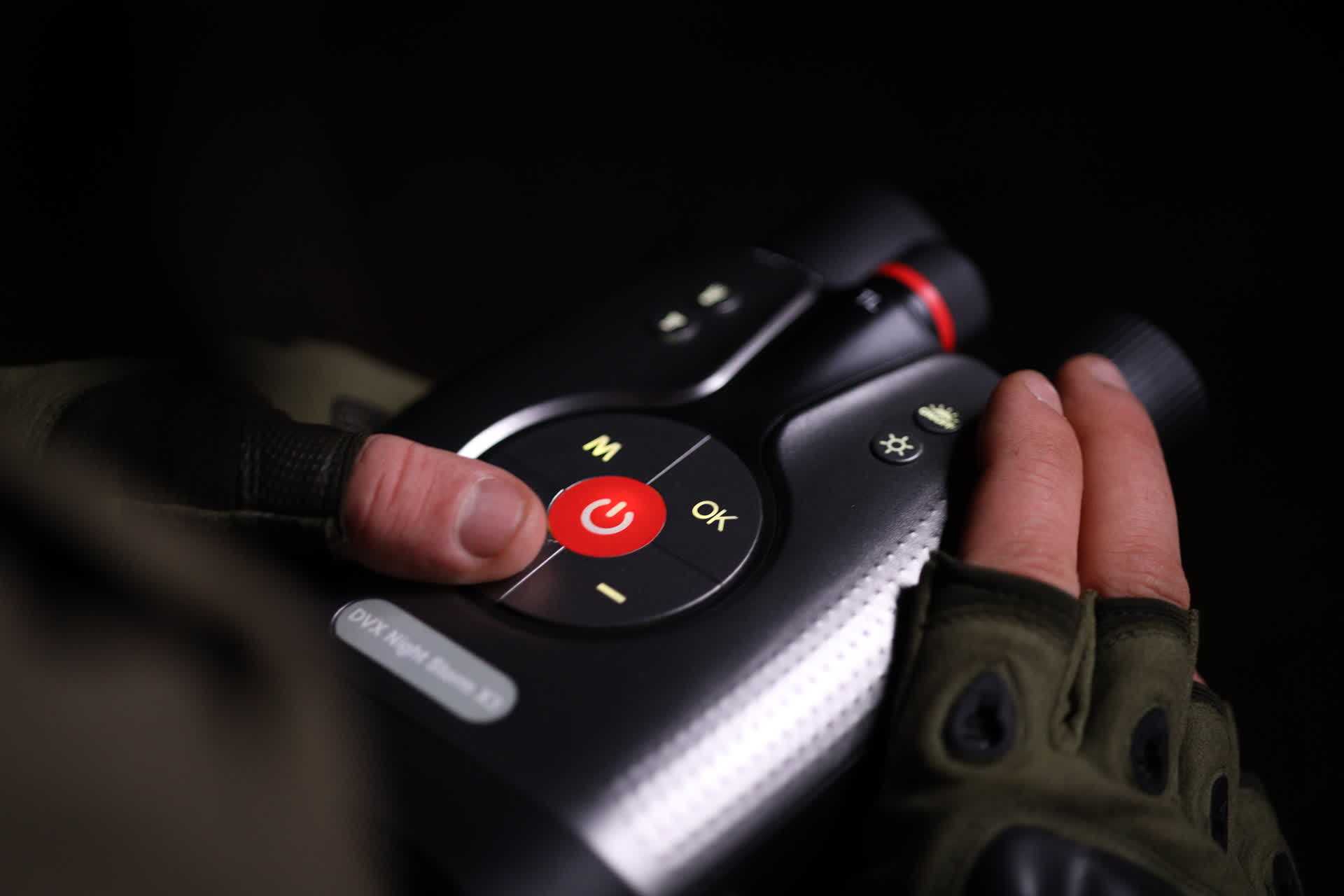 FRM 2860
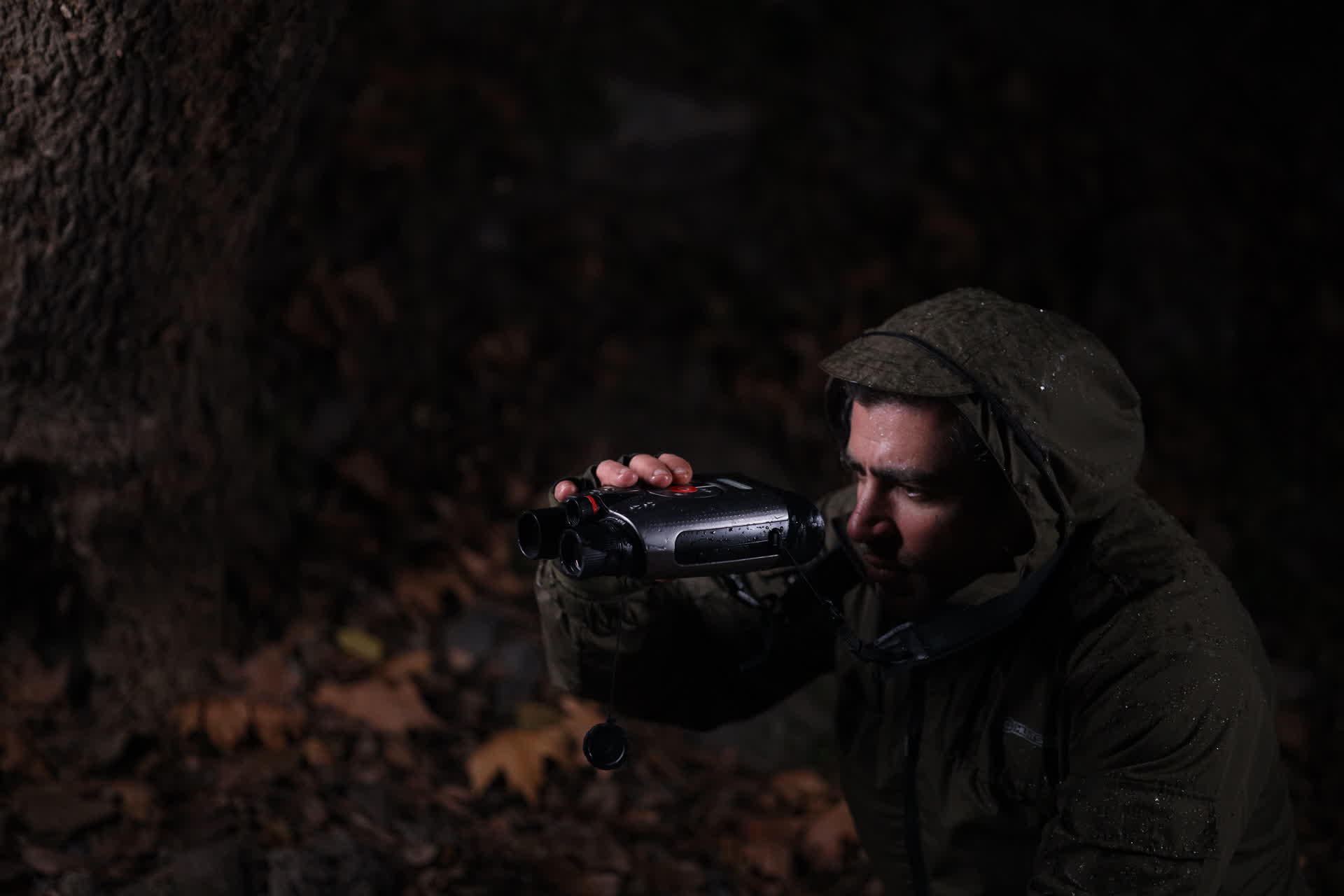 FRM 3010
Straight
answers.
06 Night vision, asked and answered
How does DVX digital night vision work?
Two sensors watch the same scene — an IR low-light sensor and a 4K color sensor. A 20 TOPS neural engine fuses both feeds 60 times per second into native 4K full color, down to 0.0001 lux. No intensifier tubes, no green phosphor.
How far can the Night Storm X3 see at night?
The X3 detects human-sized targets out to 1,500 meters in the dark, and its built-in laser rangefinder reads the exact distance to ±0.5m.
Can animals or people see the infrared light?
No. Every DVX emitter operates at 950nm — past the edge of the visible spectrum. Unlike common 850nm illuminators, there is no red glow at any distance, from any angle.
Does the Night Storm X3 record photos and video?
Yes — native 4K video and 52MP still photos, captured onboard. What you see through the eyepiece is what you take home.
What is the difference between the Night Storm X1 and X3?
The X1 ($299) is a single-sensor true-4K instrument with 1,200m of range and an 18-hour battery — the record-breaking first device. The X3 (from $429) adds dual-sensor AI fusion for full color at 0.0001 lux, 1,500m detection, a laser rangefinder, and 24-hour runtime.
Who is DVX night vision for?
Anyone the dark usually sends home: wildlife observers, campers and overlanders, hunters, search-and-rescue teams, property owners, and night photographers. Professional-grade optics without the government price tag.
Read enough.
See it yourself.
15,000+ backers · $4.9M funded · Early-bird from $429